Databricks Unity Catalog
Connect Databricks Unity Catalog to Queringo. Setup, fields, testing, editing, and alternatives.
Governed catalog over the lakehouse.
At a glance
| Category | Data lakes |
| Auth | Token |
| Plan | Scale and above |
Setup
- Open Connect source
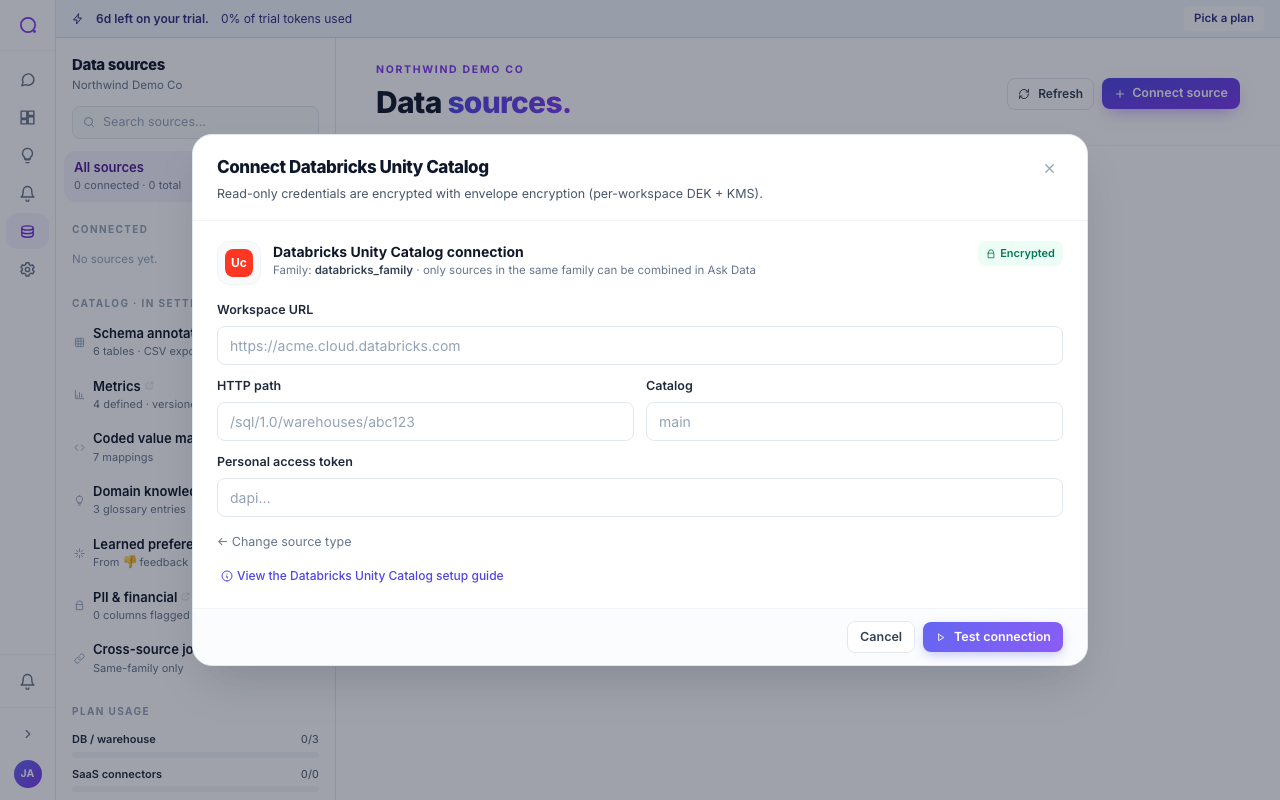
In the app, go to Data sources and choose Connect source. Open the Data lakes tab and select Databricks Unity Catalog.
- Paste your access token
In the provider's admin area, generate an API access token with read access, then paste it into the Databricks Unity Catalog connection form.
- Save the connection
Queringo tests the connection before saving, then discovers the schema. PII is flagged and masked by default during discovery.
Where to find these in your provider
- In Databricks, ensure the workspace is enabled for Unity Catalog and you have READ on the catalog you want to expose.
- Generate a personal access token from your user settings (Developer → Access tokens).
- Note your workspace hostname and the catalog name.
- Paste the hostname, catalog, and token into the connection form.
Test the connection
Queringo runs a connection test as part of saving. If it fails, the error message indicates what to check (credentials, network reachability, or scope). From Data sources, you can re-run Test connection on the source row any time, for example after rotating a secret or changing network rules.
Edit or rotate
To change connection details (host, port, or database), open the source from Data sources and edit it. To swap only the secret (password, key file, or token), use Rotate credentials so existing dashboards and alerts keep working. See Rotating credentials.
Reference
Suggest a different connector
Don't see what you need? In the Connect a data source picker, choose Request it. Queringo bundles votes from every workspace asking for the same one and prioritizes accordingly.
Related connectors
What's next
For the category overview and shared options, see Data lakes. To keep sources healthy, see Managing sources.