MongoDB
Connect MongoDB to Queringo. Setup, fields, testing, editing, and alternatives.
Connect MongoDB to query your databases data in Queringo.
At a glance
| Category | Databases |
| Auth | Credentials |
| Plan | Growth and above |
| Default port | 27017 |
Setup
- Open Connect source
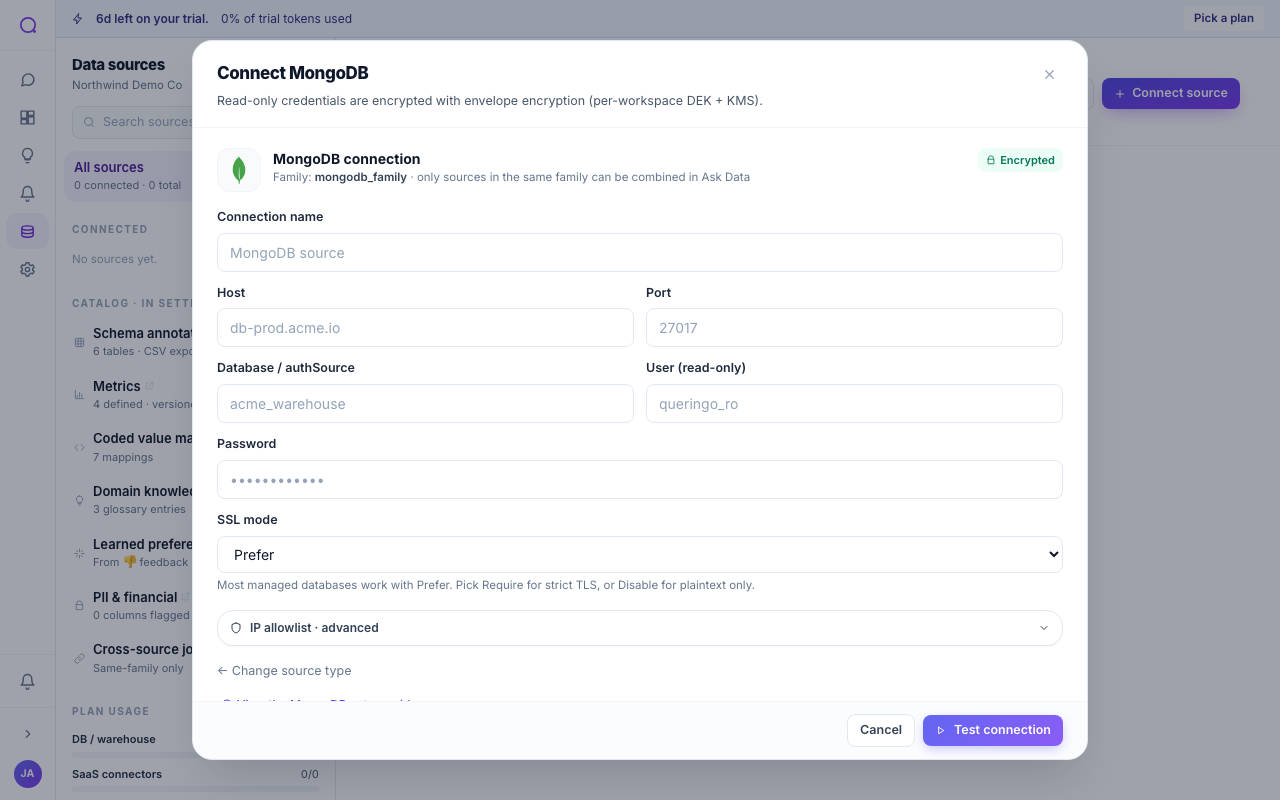
In the app, go to Data sources and choose Connect source. Open the Databases tab and select MongoDB.
- Enter connection details
Provide the host, port, database name, and a read-only user and password. The default port is
27017. Enable SSL/TLS if your database requires it, or configure an SSH tunnel for a private network. - Save the connection
Queringo tests the connection before saving, then discovers the schema. PII is flagged and masked by default during discovery.
Where to find these in your provider
- In MongoDB (Atlas or self-hosted), open the database access settings.
- Create a database user with the
readrole on the databases you want exposed. - If you use Atlas, add Queringo's outbound IP to the network access allowlist.
- Copy the connection host and the user/password to use in the connection form.
Test the connection
Queringo runs a connection test as part of saving. If it fails, the error message indicates what to check (credentials, network reachability, or scope). From Data sources, you can re-run Test connection on the source row any time, for example after rotating a secret or changing network rules.
Edit or rotate
To change connection details (host, port, or database), open the source from Data sources and edit it. To swap only the secret (password, key file, or token), use Rotate credentials so existing dashboards and alerts keep working. See Rotating credentials.
Reference
Suggest a different connector
Don't see what you need? In the Connect a data source picker, choose Request it. Queringo bundles votes from every workspace asking for the same one and prioritizes accordingly.
Related connectors
What's next
For the category overview and shared options, see Databases. To keep sources healthy, see Managing sources.